What do oncoming gondoliers and resistant corporate stakeholders have in common?
Ever since moving my life and work to Venice, I've had to adapt to a completely different set of operational rules. Take a recent project at our apartment: we are doing a major renovation and inherited a pristine, never-been-used bathroom sink that didn't fit our new layout. Determined to keep it out of a landfill, we decided to give it to a friend who could actually use it.
In most parts of the world, that involves a car, a boot, and a quick drive. In Venice, it involves a boat, checking the tide times, navigating a labyrinth of canals (some of which are strictly one-way), and shouting out loudly when turning blind corners to alert oncoming gondoliers.
You also need a suitable mooring spot. Fortunately, the property had an existing water gate (porta d'acqua) leading directly into the courtyard, which made loading the boat viable. But you still can’t just drive up and pick up a second-hand sink!
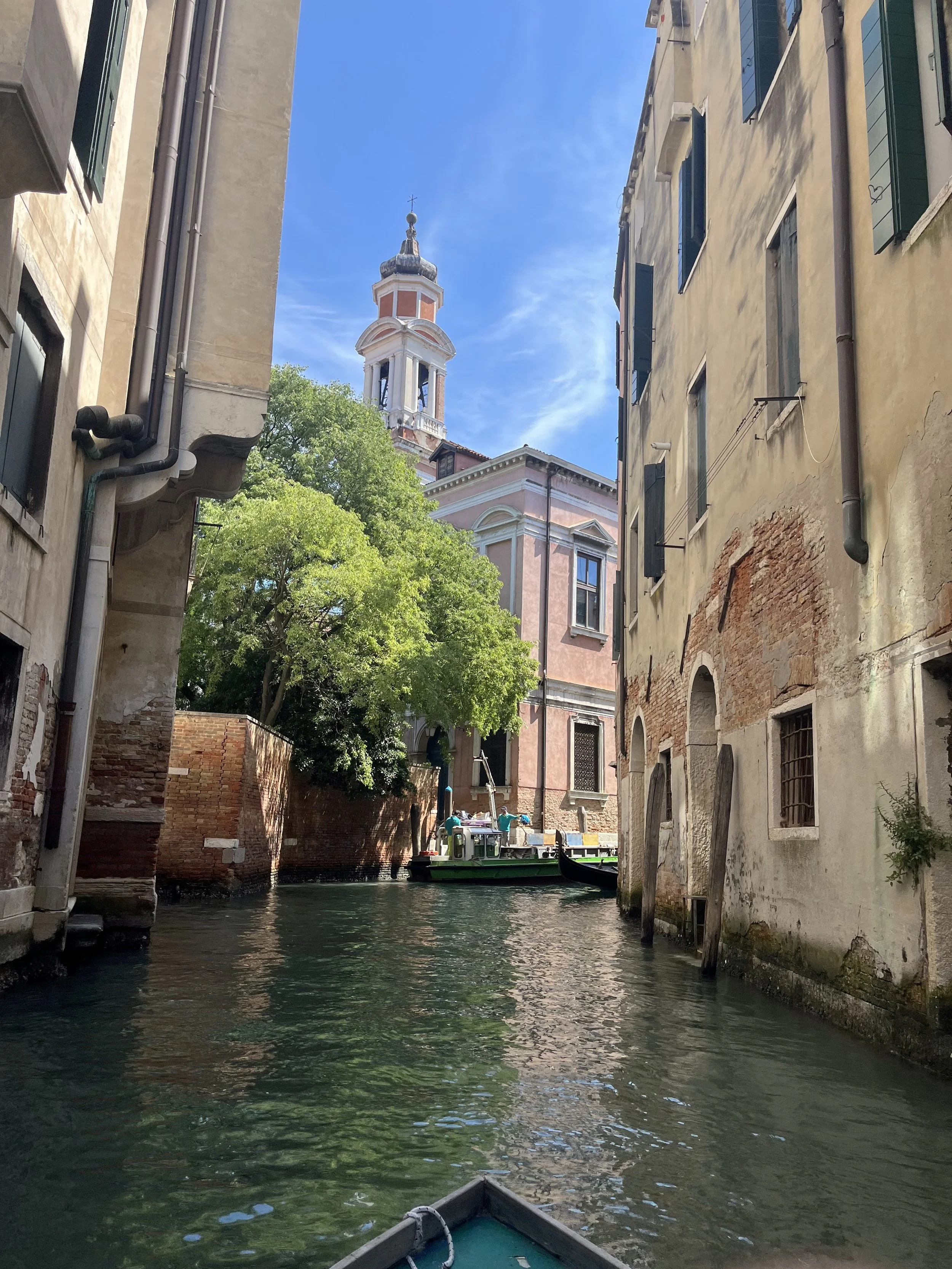
Navigating one of the hundreds of canals!
Navigating the Local "Canals" of Change
Navigating the logistics of this city has been a brilliant reminder of why Organizational Change Management (OCM) is so vital when rolling out major global initiatives. In my work leading communications and engagement strategies for Global IT Security, Quality, and Compliance rollouts, the biggest hurdle is rarely the technology itself. It’s the local environment.
You can design the most robust security framework or compliance policy in the world, but if you don't account for how people actually navigate their daily canals, the initiative will stall.
Three OCM Takeaways from the Venetian Waterways
Respect the Local Architecture: You cannot force a standard, rigid template onto a unique ecosystem without adjustments. If you ignore existing culture, local operational constraints, and established workflows, your compliance roll-out will face immediate friction.
Over-Communicate at the "Blind Corners": Shouting out before a turn keeps everyone safe in Venice. In global security transformations, proactive communication at critical pivot points prevents major collisions with resistant stakeholders and uncovers hidden risks early.
Map to Existing Infrastructure: Having that porta d'acqua made the logistics possible because we utilized a channel that was already built into the architecture. In global IT rollouts, stop trying to force entirely new habits from scratch. Look for the existing "gateways"—the established workflows, natural team champions, and routines already in place—and anchor your security or compliance changes there.
Every major corporate transformation has its own version of a narrow, one-way canal. The trick isn't wishing the constraints weren't there; it's designing the right engagement and communication strategy to guide people through them safely.
That is why a huge part of my work in OCM focuses on narrative and communication strategy. If you can’t translate complex security frameworks or compliance guidelines into engaging, human stories, your stakeholders simply won't follow you through the canal.
What’s the most unique operational constraint you’ve had to navigate in a recent global rollout? Or better yet—how did you communicate it to your team? Connect with me on LinkedIn to join the conversation.
